In-House Clear Aligner Production: Limits, Costs & Compliance

Updated: Oct 15
Thinking of cutting out the big aligner labs with your own 3D-printer? Beware: treatment complexity, unexpected expenses, and strict medical regulations turn that dream into a logistical nightmare.
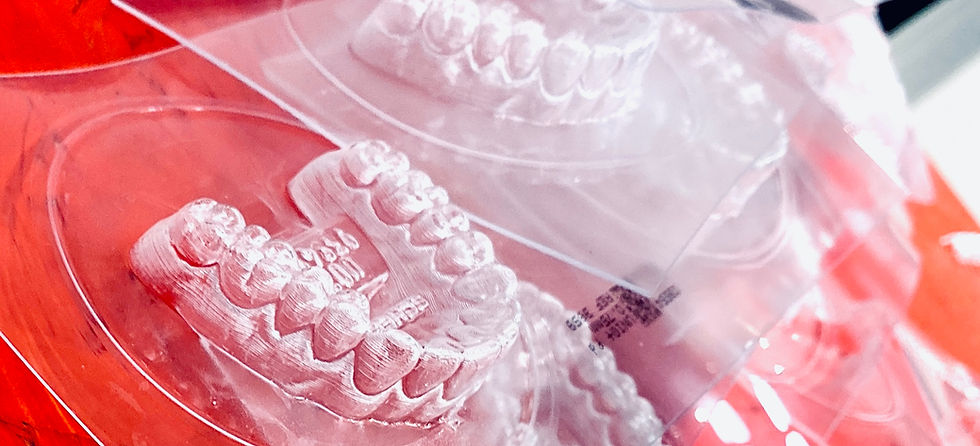
As the Co-Founder of AlignerService, I’ve advised numerous practices on clear aligner workflows and observed firsthand the pitfalls of attempting to manufacture aligners in-house. At first glance, it seems appealing: buy a 3D printer, add some software, and undercut the big aligner companies. In reality, however, the technical, clinical, and regulatory hurdles create complexity, and liability, that most general practices cannot sustain. Below, we explore in depth why in-house clear aligner production is generally inadvisable and why partnering with specialists is the smarter path.
To bolster your clinical confidence, we offer complimentary case selection and expert treatment-planning support. Simply click the button, upload your case details, and within 24 hours one of our specialist dentists will classify your case as easy, moderate, complex or recommend orthodontic referral. Give it a try today!
Why Simple Cases Only Aren’t Enough
Even well-equipped dental labs struggle to produce aligners that handle more than the simplest tooth movements.
Suitable Only for Mild to Moderate Cases In-house aligner systems can typically address mild crowding, minor rotations under 10°, or slight spacing corrections. Once you exceed these thresholds, the number of required refinements skyrockets. Each refinement means a whole new cycle of scanning, modeling, printing, thermoforming, and finishing, eating into any anticipated cost savings. Our In-House Validation Trials: In collaboration with several dental practices, we conducted head-to-head tests on in-house produced aligners versus those from large-volume labs and the leading global clear aligner brands.
Precision & Fit: Generic lab-produced appliances achieved moderately better model fidelity than In-house aligners, thanks to tighter control over printer calibration and foil selection.
Case Suitability: For single-stage simple to moderate-simple cases, in-house systems performed comparably to large-volume labs in terms of initial fit and patient comfort.
Predictability Gap: The top clear aligner brands, backed by advanced planning software that’s calibrated end-to-end with their own production workflows, still delivered the most predictable tooth movements and required the fewest refinements overall. Their integrated platforms ensure that attachment geometries, and foil properties are all synchronized before a single tray is fabricated.
Receive regular free tips and tricks for your clear aligner treatments.
High Case Volume Needed to Break Even Fixed costs (printer purchase, dedicated lab space, staff training, instrument depreciation) be amortized over a large number of cases. In our experience, practices need to complete at least 100–150 aligner cases per year (roughly two to three new starts weekly) at the point they transition to in-house production, or the model simply won’t succeed.
If a dental practice plans instead to “grow into” that volume over time, they immediately introduce an extremely complex integration layer - one that encompasses:
Clinical workflows From initial records, delivery, communication, tracking, clinical handling, all through to refinements and retention.
Instrumentation and orthodontic competencies Diagnostics, orthodontic treatment planning, ortho-restorative planning, mastering virtual corrections, movement veolcity, attachment design and positioning, IPR, staging logic, auxillaries, etc.
Leadership and delegation Training assistants and hygienists to handle clinical procedures, patient communication and manage lab tasks
Patient communication Managing sales, compliance, expectations around refinements and timelines, etc.
Marketing and case acquisition Driving sufficient new starts to hit the breakeven threshold
Below the 100-case mark, any marginal savings are rapidly consumed by the labor and material overhead of added refinements and retakes, making in-house production financially and operationally untenable.
That volume requirement isn’t just about dollars or euros - it’s directly tied to the complexity and error rates you’ll face. When you scale up to 100+ cases, every miss in your workflow or gap in clinical skill multiplies, underscoring why mastering each phase is non-negotiable.
The Hidden Costs of In-House Clear Aligner Production You Can’t Afford to Ignore
We have defined three critical phases for successful clear aligner implementation in a general practice. Any gap in these phases jeopardises outcomes and profitability. I have tried to illustrate an in-house setup and how some of the requirements in the different phases will affect the clinical outcomes.
Phase | Core Components | Consequences of Gaps |
Phase 1: Foundations | • Comprehensive patient records (intraoral scans, x-rays and good photos) • Clinical workflows • Data preparation and model cleanup • Rigorous case selection criteria | Initiating unsuitable cases → geometric inaccuracies → repeated remakes not knowing why |
Phase 2: Clinical Mastery | • Seamless diagnostics, orthodontic- and restorative treatment planning, CAD planning (attachment placement, staging) • Printer calibration and resin management • Thermoforming protocols (temperature, pressure) • Precise trimming, polishing, labeling | Poor fit, foliar thinning, unrealistic and unpredictable treatment planning → patient discomfort, mid-treatment pauses and refinements. Even a realistic plan can lead to dissatisfying results if the aligners don't fit as they are supposed to. |
Phase 3: Business & Quality | • ISO 13485-compliant quality management • Technical documentation for each device batch • Capacity scheduling (printer throughput vs. weekly targets) • Traceability for audits and post-market surveillance | Regulatory non-compliance → fines, market withdrawal, liability risks |
Mastering these phases demands a dedicated, trained technician (or team) and ongoing mentorship through at least 200–300 cases to build consistency. Few general practices can justify the personnel costs and learning curve.
3 Phases That Make or Break Success
Unlike industrial aligner labs, where every step is engineered as an end-to-end system, clinic-grade setups are cobbled together from multiple vendors, each with its own specifications:
Fragmented Software Stack Your intraoral scanner, CAD software, print slicer, and thermoforming machine often come from different companies. File formats, version updates, and proprietary algorithms can misalign, leading to STL import errors, minor model defects or incorrect foil thickness compensation.
Printer Variability FDM Printers: Low cost but layer lines and Z-axis inaccuracies cause imperfect aligner seats. SLA/DLP Printers: Higher fidelity but require strict resin handling, temperature control, agitation, filter changes and post-print washing (ultrasonic or manual) plus UV curing. Minor deviations in wash time or cure wattage alter fit and mechanical properties. Not to mention all the potential minor shape changes that may happen between initial printing and final curing. (Even some of the global aligner companies have had challenges with model stability in their industrialised printing protocol)
Thermoforming Nuances Precise temperature, dwell time, and vacuum/pressure parameters are critical. Underheat → foliar creases; overheat → thinning and brittleness. Post-forming, each aligner edge must be hand-trimmed, beveled, and polished to medical standards. Missteps here can create micro-tears or irritations.

Ready to take your aligner treatments to the next level?
Discover expert strategies, step-by-step guidance, and proven methods for mastering aligner orthodontics in our book: Mastering Aligner Orthodontics. Whether you're using SureSmile, Invisalign, Spark, ClearCorrect or another major aligner system, this book is your ultimate resource for achieving predictable, profitable results.
From diagnosis and treatment planning to digital planning with either SureSmile, Invisalign, ClearCorrect or Spark including "how to" guides for every system - it is all covered in the book.
Empower your practice and deliver the exceptional care your patients deserve.
Why Component Incompatibility Derails In-House Clear Aligner Production
Each added step in your in-house chain multiplies the risk of error and shifts legal responsibility squarely onto your practice:
Scanning → Data Prep Errors Misaligned scans or leftover artifacts produce flawed models.
CAD → Print Failures Incorrect layer heights or support placements result in warped or incomplete models.
Print → Thermoform Mishaps Air bubbles or misfit lead to misplaced aligners and therefore require additional patient visits and refinements.
Finishing → Delivery Mix-ups Wrong attachment placements, unnecessary IPR due to inaccurate segmentation or mislabeled aligners lead to treatment delays and unhappy patients.
When aligners fail, the doctor, the dental practice and the practice owner, not the printer manufacturer or software vendor, bears clinical and legal accountability.
Regulatory Hurdles Are Not Optional
Clear aligners are classified as Class IIa medical devices under Europe’s Medical Device Regulation (MDR). In-house production triggers stringent obligations:
Quality Management System (QMS) Must be ISO 13485 certified, covering design controls, supplier audits, corrective actions, and change management.
CE Marking You need either a notified-body audited QMS for your own devices or a formal partnership with a CE-certified aligner manufacturer.
Technical Documentation For each aligner batch: device description, traceability of resin lot and foil lot, risk management file, sterilization validation (if applicable), and labeling compliance.
Post-Market Surveillance Track and investigate any device-related incidents, maintain vigilance reports, and issue corrective actions or field safety notices if necessary.
Non-compliance can result in regulatory fines, forced market withdrawal of devices, or personal liability for practitioners.
Conclusion: Focus on Your Core Strengths - Partner for the Rest
While the allure of complete vertical integration is understandable, in-house aligner manufacturing introduces complexity, hidden costs, and compliance burdens that outweigh the nominal savings for most practices. Instead, we recommend:
Outsource Treatment Planning & Manufacturing Select a global aligner company, learn how it works and let them produce your clear aligners. Collaborate with expert dentists and orthodontists (such as AlignerService.com) for case selection, treatment planning, virtual correction and clinical support throughout the treatment. This gives you realistic plans, maximum predictability and reduces the need for refinements. Why it works: Leverage expert workflows and CE-certified production to ensure predictable aligner outcomes - without the lab headaches.
Be a leader - Invest in Clinical Excellence Allocate resources to refining your diagnostic skills, patient communication, and chairside efficiency through a collaborative team effort. Rather than running a mini dental lab. Why it works: Focus your time and resources on diagnostics, patient communication, and chairside efficiency for superior treatment satisfaction.
Build Collaborative Partnerships Engage in training programs, co-mentoring arrangements, and vetted referral networks to scale your aligner offerings without the operational headaches. Why it works: Tap into training programs, co-mentoring, and referral networks to scale your aligner offerings without operational overload.
By concentrating on what you do best - delivering outstanding patient care - you’ll achieve superior treatment outcomes, protect your practice from risk, and enjoy a healthier bottom line.
To bolster your clinical confidence, we offer complimentary case selection and expert treatment-planning support. Simply click the button, upload your case details, and within 24 hours one of our specialist dentists will classify your case as easy, moderate, complex - or recommend orthodontic referral. Give it a try today!
Join 1,500+ practices who receive our monthly tips—subscribe now!

Kind regards
Jesper Hatt DDS
P: +41 78 268 00 78
AlignerService
We are dentists helping dentists create realistic, safe and predictable treatment plans with clear aligners.
Currently more than 2,500 dental clinics in 23 countries use our service on a regular basis. We offer expert guidance in the following clear aligner systems: Invisalign, SureSmile, ClearCorrect, TrioClear, Angel Aligners and Spark.
AlignerService is a preferred partner of ClearCorrect and TrioClear.
