Which orthodontic cases belong in general practice?

She's 48, and you've been her dentist for twelve years. Today she's back because the distopalatal cusp on tooth 16 finally gave way. You look at the rest of the mouth while you're in there. The lower anteriors are shorter than they were in the photos from 2019, the upper laterals are chipping at the incisal edges, and the two crowns you placed early on will need replacing before she turns 55. You already know roughly how this mouth ends. The open question is whether the teeth get moved first, and who decides where they end up.
Refer her out and the case comes back finished to an orthodontic endpoint, which is not always the endpoint you need for the restorative work.
Are general dentists taking over adult orthodontic treatment?
In short: for adult patients that shift is already underway, and restorative thinking is what drives it.
We're asked this more and more often, by the aligner industry and by general dentists themselves. In the clinics we support, adult aligner treatment has moved steadily out of specialist practice and into general practice, and the case volume is the part everyone can see.
One caveat before anyone celebrates. Nobody measures the quality of the orthodontic treatment delivered in general practice. Case numbers get counted. Finishing quality, occlusal stability, root position and periodontal cost do not, at least not anywhere that would let us say whether the work is good. The answer may not show up for a decade or more. Anyone who tells you the growth curve proves the quality is guessing.
Which cases should leave your practice?
In short: growing patients and surgical cases. Both rest on training a general dentist doesn't have.
Growth is the orthodontist's own ground. Influencing it, adapting to it, timing an intervention against it, all of that requires three to four years of specialist training after dental school, and no course weekend replaces it. When a growing patient turns up in your practice, the work is to recognize the case and refer it. We say that plainly to every dentist we work with.
The second group is the orthodontic-surgical patient. Skeletal discrepancies that need the jaws repositioned belong in a team of an orthodontist and a maxillofacial surgeon, with the orthodontic phases planned around the surgery. That team does not assemble itself around a general practice.
Then there's the group in between, and it's larger than both of them. Many adult Class II and Class III patients are not surgical candidates, either because the discrepancy is moderate or because they will not accept an operation. You can't move an adult Class II into a true Class I relation without either surgery or a set of compromises. So the treatment becomes a compensation, and the compensations have to be chosen deliberately, before the first aligner is made. What you're accepting, and what you're protecting.
The general dentist is often the first to see it, because she's looking at the occlusion through the restoration she'll have to do herself.
Where does the general dentist have the advantage?
In short: in functional occlusion, and in knowing what the teeth have to survive for the next twenty years.
Orthodontists are exceptional at what they trained for. Moving teeth in growing patients, handling orthognathic cases, biomechanics and biophysics, growth and growth adaptation. No general dentist reaches that level, and the specialization is the reason.
It also shapes how a case gets examined. Most orthodontic training happens on patients whose systems still adapt, and a static model in maximum intercuspation is good enough for that work. Adults are far less forgiving. Their muscles, joints and wear facets have had thirty or forty years to settle, and an occlusion that looks acceptable in maximum intercuspation can still be wrong in every excursion. Those cases need models mounted in an articulator after a facebow registration, with individual condylar guidance. It's a different diagnostic habit, and it grew out of a different patient population. Training decides which habit you have.
The reverse is just as true. Orthodontists rarely work with restorative materials, preparation design, or the question of how much tooth structure a plan will cost the patient later. That's a large part of why interdisciplinary ortho-restorative cases go sideways in the handover between the two. Each party is doing competent work toward an endpoint the other never defined.
Who plans the orthodontics if you're not an orthodontist?
In short: you conduct the case. You don't have to play every instrument, but you're responsible for the score.
Most general dentists find this hard to say out loud: your orthodontic knowledge is limited. Saying it is the first requirement for running these cases properly, because it tells you exactly what has to be brought in from outside.
For twenty years there were two ways to bring it in, and both of them leaked.
The first was referral, and it cost you the plan. You send the case out with photos, drawings, a Digital Smile Design, models mounted in an articulator, a wax-up with the desired positions marked as clearly as you know how. Months later the patient comes back finished, finished to an orthodontic endpoint, and often with no sign that anyone opened your material. Now you're rebuilding a worn dentition, or replacing the missing teeth, in positions that make the plan you designed impossible. Most general dentists who do restorative work have a version of this story.
The handover failed because nobody had agreed on a shared endpoint. The material you sent was never part of anyone's plan.
The second way was hiring, and it does reduce the risk, because the orthodontist is now on your payroll and the case is discussed under your roof. What it leaves untouched is the day itself. You're both booked from morning to evening, and the conversation the case needs has to happen in a window where you're both free. Most days there isn't one. The asynchronous exchange you take for granted online simply didn't exist inside a practice, though a few have built it since.
What changed is that the planning moved online, and the timing moved with it. A specialist in adult clear aligner treatment can design the orthodontic phase of your case from another country, inside your treatment preferences, with your restorative endpoint written into the plan before the first aligner is made. You send the case when it suits your day, and the answer comes back without either of you having to be free at the same time. Our clinical lead has co-created more than 28,000 treatment plans that way, for dentists in 20 countries.
Clinical ownership stays where it belongs, with you. You see the patient, you carry the responsibility, and you're the one who knows what that mouth has to look like in 2046. Every plan is made by a dentist or an orthodontist, and co-creation means you're in the room while the movements are being staged.
What do both groups miss?
In short: the face.
Watch a setup being approved, by an orthodontist or by a general dentist, and you'll see the same thing. Eyes on the screen while the teeth and the arch form move. The profile photograph is rarely open at the same time.
Teeth belong in a face. The lips rest on them, and the soft tissue leans on whatever you leave behind. Proclining upper anteriors to relieve crowding changes lip support and the nasolabial angle. Retracting them changes it the other way. In an adult, whose soft tissue has lost most of its ability to adapt, those changes are permanent, visible, and usually the first thing the patient's family comments on.
So we ask for facial photographs on every case, and we look at them beside the setup rather than after it. It takes about a minute and it's the cheapest quality control in the whole treatment. It catches the plans that would have finished with a technically correct occlusion and a face the patient doesn't recognize.
That's the shared blind spot, and neither specialization protects you from it.
Start with a Free Aligner Risk Check
If you have an adult case where the orthodontics and the restorative work have to fit together, send it in before you commit to a plan. A Free Aligner Risk Check gives you a clinical read within 24 hours on how complex the case really is, what the risks are, and whether it belongs in your practice, in a team, or with a specialist.
Dentists and orthodontists, never technicians.
Nothing to buy at the end of it.
Sign up for the blog for more insights, free tips, and tricks on clear aligner treatments.
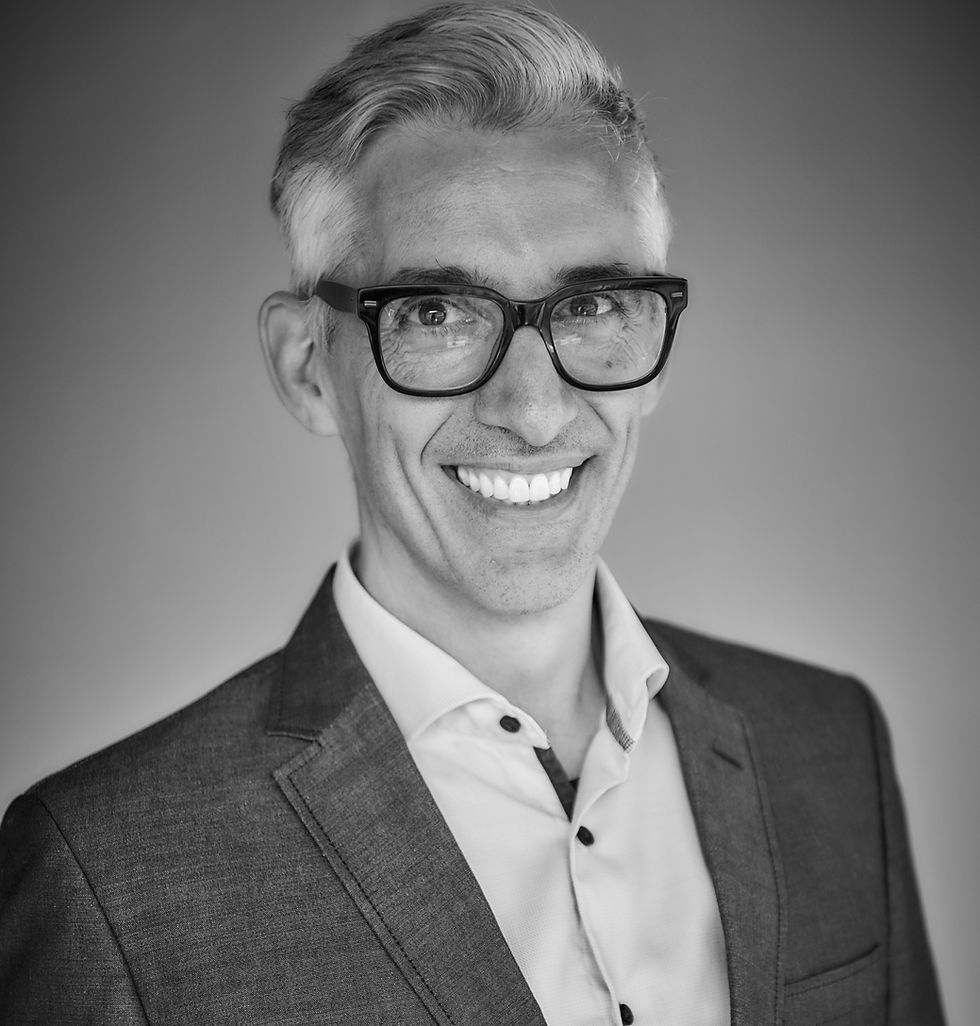
Kind regards
Jesper Hatt DDS
P: +41 78 268 00 78
